


Cold Process vs. Melt and Pour Soap: What’s the Difference?
Quick answer: Cold process soap is made from oils and lye from scratch, then cured for 4–6 weeks. Melt-and-pour soap starts with a pre-made soap base that has already gone through saponification. Cold process gives makers and brands more control over ingredients, texture, scent, and final bar quality. Melt-and-pour is faster and easier for small craft projects, but it usually offers less formula control and may not last as long in the shower.
| Method | How it works | Cure time | Best fit | Main tradeoff |
|---|---|---|---|---|
| Cold process | Made from oils and lye from scratch through saponification. | 4–6 weeks | Premium natural soap bars, private label soap, and custom formulas. | Takes longer but gives more control. |
| Melt-and-pour | Made from a pre-made soap base that is melted, customized, and poured into molds. | No added cure time | Small craft projects, quick batches, and beginner soap projects. | Faster but offers less formula control. |
| Hot process | Made from oils and lye with added heat to speed saponification. | Often shorter than cold process | Rustic handmade soap and faster small-batch production. | Texture is usually less smooth. |
| Glycerin soap | Usually a transparent soap made with extra glycerin and sugar alcohols. | Varies by base | Decorative bars and clear molded designs. | Can sweat or soften more easily. |
If you are new to soap making, you might wonder which method is better for making bar soap: cold process or melt-and-pour? Both approaches can produce finished bars, but they serve different goals.
Let's take a closer look at different soapmaking methods, how they work, and their pros and cons. We’ll compare cold process soap, melt-and-pour soap, hot process soap, and glycerin soap.
Cold Process Soap vs. Melt and Pour Soap
Melt-and-pour soap is made from a pre-made base, usually sold in blocks. Soapmakers melt a portion of the base, adding colorants, scent agents, exfoliants, and moisturizers to the melted portion. This is also the point at which swirls and decorative objects are added. While it’s still hot, the finished base is poured into molds.
The final product doesn’t require a curing period because melt-and-pour soap bases have already undergone the traditional soapmaking process of saponification. Once melt-and-pour soap bars have been removed from their molds, they are ready to use immediately. But since melt-and-pour bases are designed to melt, soaps made from them will not last as long in the shower as cured bars of cold process soap.
Most true soap doesn’t melt down well and, consequently, doesn’t work well as a good melt-and-pour base. Glycerin soap and soap made with white coconut oil fare better than most, which is why melt-and-pour bases are usually made from one of these two. And since melt-and-pour soap contains extra glycerin, which attracts moisture from the air, it is prone to “sweating.”
So the most significant difference between cold process soap vs. melt and pour soap is within the quality of the soap bar. The cold process in soap making is time-consuming, and it can take a lot of trial and error with oil blends, essential oils, and natural preservatives to perfect the recipe. Still, the final product is high-quality soap that is gentle on the skin and lasts longer. The melt-and-pour process is much simpler, but it gives you less control over the ingredients used, and the soap made using this method tends to sweat in humid conditions. Besides, melt-and-pour soap will not be as long-lasting as fully cured cold-process soap.
The melt-and-pour process provides an easy way to create homemade soaps in various shapes and styles. While not officially soapmaking, melt-and-pour is a great way to be creative with soap and to do it safely enough that it’s fine for use in crafts with children.
Cold Process vs. Hot Process Soap
All traditional soaps are made by combining fats or oils from animal, vegetable, or mineral sources and an alkali, such as sodium hydroxide lye, that induces a chemical reaction called saponification. First, the fats and oils are degraded into free fatty acids that then combine with the alkali to form crude soap. The lye reacts with the oils, turning what starts out as liquid into soap blocks. If everything is done correctly, the finished product has no lye.
So what is the difference between cold process vs. hot process soap making? Hot process soap uses heat from an external source to accelerate saponification, the process by which fats and alkalis combine to create soap. While cold-process often uses heat early on to warm the base oils, once the oils and sodium hydroxide are mixed, heat from the process itself is relied on to finish saponification.
Cold-process soap making is done at room temperature. The saponified base is mixed with added essential oils, and before it solidifies, it is poured into a block mold to set up and harden for 1-2 days. Once the soap solidifies, but while it’s still soft, it is removed from the mold and cut into bars. Then it has to undergo a curing process in a cool, dry place. The cure time for cold-process soap is 4-6 weeks, and then it’s ready to use.
With the cold process, soapmakers get harder, smoother soap bars that last longer in the shower and are gentle on the skin. At Botanie Soap, we always use the cold-process method to create skin-compatible, nourishing bar soap that we offer for private-label use. The cold-process method allows us to have full control over ingredients, so we make all-natural soap that’s great for skin care.
For example, our moisturizing Shea Honey Oat Bar Soap is perfect for people with sensitive skin. It contains delicately balanced shea butter, honey, and finely ground oatmeal, creating a rich lather to nourish all skin types.
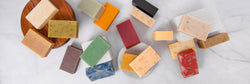
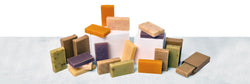
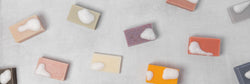

Soap bars made using the hot process have a shorter cure time. Technically, it’s safe to use them once they are fully hardened (typically 24-48 hours). But you’ll get better soap bars if you allow them to cure for at least one week. During this time, bars of soap will harden up and last longer. The hot process soap bars have a less smooth texture than the cold process soaps and have a “rustic” appearance.
What’s the Difference between Cold/Hot-Process Soap and Glycerin Soap?
There are two answers. Technically, all true soap (as defined by the FDA) is glycerin soap since glycerin is a natural by-product of saponification.
What most people know as glycerin soap – transparent or opaque bars, often with fun things floating in them – is different. That glycerin soap usually takes saponification a couple of steps further. A sugar-alcohol solution is added to the saponified mixture along with extra glycerin. The alcohol solution helps maintain transparency, and the extra glycerin balances the drying nature of the alcohol.
Remember that it is chemically impossible to make soap with only glycerin. Such a product would not have any cleansing or lathering properties. So all translucent glycerin soaps are made from oils, water, and lye, just like all traditional soaps made with the cold process method we use at Botanie Soap.
Our all-natural soaps have a naturally high glycerin content, so they have a calming and moisturizing effect on the skin. The cold-process method offers a lot of possibilities for customization, so if you’re interested in custom soap manufacturing, we can help you create and launch a bespoke soap line.
Which Soapmaking Method Should You Choose?
Choose cold process if you want a premium, long-lasting bar with full control over ingredients. Choose hot process if you want a traditional soap with a shorter cure time. Choose melt-and-pour if you want a simple craft method with no lye handling. Choose a custom manufacturer if you want a retail-ready soap line without handling formulation, production, curing, cutting, or packaging yourself.
Which Method Works Best for a Soap Brand?
For a hobby project, melt-and-pour can be the easiest place to start because it does not require full formulation work or a long cure time. For a retail soap brand, cold process is usually the stronger choice when ingredient control, bar quality, scent consistency, and repeatable production matter.
If you want cold-process quality without managing formulation, curing, cutting, packaging, and production yourself, Botanie can help you build a scalable soap line through custom soap manufacturing.
Prefer to skip the soap-making entirely?
Botanie offers all three in wholesale quantities — cold-process bar, glycerin, and liquid castile — private label ready, no formulation work required.
See our wholesale soap catalogChoosing the Right Soapmaking Method
Understanding the differences between cold-process soap, hot-process soap, glycerin soap, and melt-and-pour soap helps you choose the right method for your goals. Cold and hot process both mean making soap completely from scratch by combining oils and sodium hydroxide lye, which causes a chemical reaction called saponification. Melt-and-pour soap bases have already gone through that process, so this method is typically used for simple homemade soap bars, craft projects, and quick beginner batches.
For brands, the better choice depends on how much control, consistency, and scale you need. Cold process is usually the strongest fit when you want a higher-quality bar, repeatable production, and more control over ingredients.